US Housing Market Could Take Dip Down In 2010

Despite signs of stabilization at the end of 2009, next year could prove treacherous for the housing and mortgage markets. "We still have a crisis in the number of people who can't pay their mortgage, and we haven't seen the peak of that yet. It's going to weigh on us for several years," says David Lowman, CEO of Chase Home Lending.

Read Whole Article Here

Spring Housing Market Hints At Recovery

"While sales have been down compared to last year, we've seen a steady increase in the number of sales and median home prices on a month-to-month basis. This steady climb gives us reason to be hopeful that we'll continue to move in a positive direction."

Read Whole Article Here

A New Home In The Chicago Area Less Than $200K?

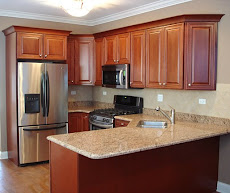
Is it still possible to buy a new home in the Chicago area for less than $200,000? It sure is, says recent buyer David Smith, if you are willing to make compromises and forgo some luxuries.

Read Whole Article Here

Can a Housing Recovery Gain Ground?

Consumer confidence has perked up and affordability is high... Through March, the more than three-year plunge in home sales appears to have bottomed out.

Read Whole Article Here

Builders Upbeat: Housing Market to Rebound

"Over the past 33 years, our nation has gone through seven housing cycles," said David Ruttenberg of Belgravia Group, a Chicago home building company. "As surely as night follows day, every boom period was followed by a downturn. Then, just as surely, the market rebounded."

"The main reason for today's housing downturn is more subtle. This time, the main problem comes from Wall Street. The root issue is "financial engineering". For many years, some lenders made loans to home buyers who were marginally qualified at best. These lenders made shaky loans because of excessive incentives they received from underwriters who bundled those loans, then sold them," Ruttenberg said.

By comparison, "In 1979, our sales were down about 80 percent over the previous year. It took us two years to recover fully," said Jim Hughes Jr., executive vice president of Wheaton-based developer Wiseman-Hughes Enterprises.

Even worse, "Back in 1979 and 1980, everything was 30-year fixed mortgages at 18 percent. You were lucky to get 15 percent," Hughes said.

Read Whole Article Here